Mostrando entradas con la etiqueta Century Media. Mostrar todas las entradas

jueves, 18 de abril de 2019

Tiamat "The Astral Sleep" Century Media 1991


The Astral Sleep es un álbum que aparentemente solo pudo haber venido desde principios de los años 90 y, sin embargo, no puede estar más lejos de lo que muchos de los compatriotas de Tiamat estaban haciendo en este momento. A pesar de ser una de las primeras bandas de death metal que vinieron de Suecia (por supuesto, me refiero a su encarnación anterior, la controversia que persigue a Treblinka aquí también) Tiamat nunca se quedó con el death metal por mucho tiempo. Para el '91, parece que se habían movido más allá del death metal completamente sin casi rastro de su sonido anteriormente brutal. El sueño astral, entonces, es una bestia difícil de encasillar (de todos modos, una bestia probablemente no encajaría en un casillero). Hay pesimismo y tristeza, pero es demasiado rápido y trillado como para ser considerado solo un álbum de doom metal. Hay un elemento de metal negro nebuloso, pero es más de la brumosa variedad de Cristo podrido que del estilo nórdico (después de todo, no había despegado por completo en este momento). Definitivamente, también hay algunas tendencias más rocosas aquí, pero no creo que esto sea demasiado similar a las obras posteriores de Tiamat (aunque ciertamente ha pasado un tiempo desde que pasé un tiempo con ellas). Simplemente, The Astral Sleep se sostiene por sí solo y no sigue ninguna mentalidad de rebaño en particular de la época ... es posible que tengas que contar ovejas para entrar en este estado de ensueño, pero la banda definitivamente no está siguiendo el rebaño en este álbum. .


Uno podría pensar que Tiamat estaba tratando de distanciarse de la escena del death metal en ese momento y, por sonido, definitivamente puedes escuchar esto. Aparentemente, los nuevos miembros de este álbum no tenían experiencia previa en la escena del death metal (no es algo que pusieras en tu CV, de todos modos) y el sonido aquí es claramente no sueco. La excelente producción de Waldemar Sorychta está tan lejos de la típica embestida de la luz solar como se puede obtener. Tiene un hermoso contraste; una sensación de luminosidad, una sensación de luz y sombra que un típico sonido de metal extremo simplemente no capturaría tan bien. Cada vez que escucho este álbum, estoy realmente contento de que no hayan decidido simplemente irse con Tomas Skogsberg de nuevo. De manera similar, los tambores son bastante diferentes a lo que podría esperarse de un disco de metal extremo. Realmente no hay mucho contrabajo en este disco, e incluso cuando el baterista hace algunas explosiones, parece una técnica a la que no está realmente acostumbrado. Sin embargo, en lugar de ir en detrimento de su rendimiento, en realidad hace que el álbum sea más único y convincente. La guitarra solista de Thomas Petersson también es convencionalmente melódica ... no Siege ahí, solo solos brillantes, emotivos y bien hechos.

Sería interesante ver lo que escuchaba Tiamat en este momento, ya que el estilo aquí es realmente incomparable. Sospecharía que mucho Celtic Frost, Rotting Christ y tal vez incluso algo menos esperado, como Candlemass, estaría en sus estéreos colectivos. Honestamente, escucho un poco de Candlemass aquí y creo que si le dieras a algunos de los números más sombríos de este álbum un estilo vocal limpio, la influencia sería mucho más obvia. Ciertamente, el uso de riffs de fatalidad con claves inquietantes me recuerdan más que un poco a los antiguos titanes de la fatalidad suecos. Imagínate 'Mountain of Doom' con el vibrato de cristal del Mesías y creo que sería un clásico de Candlemass. Dicho esto, señalar las influencias (que es un negocio riesgoso para empezar) no hace justicia a la atmósfera única de este álbum. Hay algo realmente inquietante en este álbum; acomoda a su oyente en un lugar extraño, en algún lugar entre el sueño y la vigilia, cuando tus sueños y pesadillas son siempre más vívidos (tampoco estoy hablando de duvet pegajoso aquí). El álbum en sí es reflexivo y nocturno de una manera que rara vez se escucha en el metal. En este álbum, al menos, Tiamat realmente entendió cuántos tonos diferentes puede tener la oscuridad.


Lo extraño para mí es que muchas de las partes más rápidas de Tiamat parecen bastante inspiradas en el thrash o, en ocasiones, como la dominación nórdica del black metal (por ejemplo, "Soy el rey (de los sueños)"). Dicho esto, nunca llamaría a Tiamat negro o thrash metal e incluso la muerte o el doom metal no parecen ser etiquetas apropiadas aquí y, sin embargo, toman riffs de todos estos estilos sin unirlos con una mala calidad al estilo de Frankenstein. Es una mezcla potente y el resultado final es bastante diferente a cualquier otro álbum que haya escuchado. Sin embargo, debo señalar que el sueño astrales un álbum sutil y uno que no necesariamente atraerá a todos. Ciertamente, las voces de Johan Edlund son un gusto adquirido; no gruñe ni grita, pero su voz tiene una calidad atormentada y macabra que se ajusta perfectamente al material. Es un grito ronco (¿sumerio?) Que separa a la banda de sus compatriotas suecos. Los primeros Katatonia podrían acercarse a este estilo, pero nuevamente, esas voces eran mucho más dramáticas, como un adolescente borracho aullando blasfemias con la esperanza de que alguien realmente escuche su proclamación de que Dios está muerto y siempre lo estará. El estilo de Johan es más reservado, más secreto, más "misterios ocultos" que una blasfemia abierta y deliberada.


Dada la naturaleza inusual de este álbum, no espero que sea una escucha acogedora para todos. No es un álbum bastante incómodo, de verdad. De hecho, esto se refleja en la opinión popular, ya que la reputación de The Astral Sleep es una especie de latente, ya que la gente tiende a preferir los álbumes de Tiamat posteriores o los elogios de otros clásicos suecos más convencionales (no hay nada de malo en eso). Tal vez el sueño astralha demostrado ser una influencia en otras bandas que intentaron volver a imaginar el metal extremo, pero muy pocas de ellas lanzaron algo tan único o conmovedor como este trabajo (a menudo produciendo monstruosidades debido a su deficiente trabajo manual). En pocas palabras, esta es una experiencia auditiva única; Sutil, pero riffy, sombrío pero nunca monótono y siempre cautivador. Una vez que has sido atraído por esas llaves fantasmales, realmente no hay salida.

sábado, 16 de marzo de 2019

Moonspell "Irreligious" Century Media 1996


En el segundo álbum de Moonspell, Irreligious, pierden más su ambiente de black metal en favor de más influencias góticas. Sin embargo, Moonspell logra hacer un álbum aún más fuerte que el predecesor de Irreligious, haciendo de este uno de los más importantes.


Es 1996, apenas ha pasado un año desde el álbum debut, Wolfheart, y Moonspell regresó con su segundo LP: Irreligious. Irreligious ha logrado a lo largo de los años un estatus aún más legendario que Wolfheart: incluso hoy en día, la columna vertebral de cada espectáculo en vivo de Moonspell depende en gran medida de los clásicos de este álbum. Sin embargo, ¿Irreligious todavía suena tan innovador como lo hizo en 1996 o la música está fechada y su elogio se basa principalmente en la nostalgia?


Con Irreligious Moonspell experimenta aún más con su sonido característico, extendiendo su núcleo de metal negro más lejos de sus raíces que nunca antes. De este modo, intercambian incluso más black metal por influencias góticas, lo que hace que este álbum se incline más hacia este último, mientras que Wolfheart se inclina más hacia el primero. Por lo tanto, en general, este álbum tiene un ritmo más lento que su primer LP y dedica aún más tiempo a crear su atmósfera pagana. Sin embargo, está claro que lo hacen de manera más efectiva que en Wolfheart, lo que da como resultado un álbum de buen gusto diverso en el que los pasajes lentos cumplen su propósito de atraer al oyente hacia su tema oculto.


Moonspell ve un cambio importante en la alineación de este álbum con Ricardo Amorim reemplazando a Duarte Picoto en las guitarras. Este cambio es notable; ya que los riffs ásperos y crujientes de Wolfheart son menos abundantes, mientras que el desplume atmosférico, los solos de guitarra clímax y los riffs pesados ​​lentos como el de la fatalidad son más comunes. Además de eso, Fernando Ribeiro mejora su juego y mejoró significativamente su canto limpio, manteniendo el tono mucho mejor que hace un año en Wolfheart. Irreligioso se ocupa líricamente de todo tipo de objeciones contra la religión, en las que Fernando Ribeiro varía de brillante a algo cursi. Los teclados y las muestras de Pedro Paixão junto con la implementación de voces femeninas operísticas todavía juegan un papel muy importante en la elección de la atmósfera en este álbum, que funciona muy bien en "Ruin & Misery".


Este álbum se abre magníficamente después de la introducción "Perverse ... Almost religious" con "Opium", que a pesar de su humilde tiempo de reproducción por debajo de 3 minutos tiene la sensación de un clásico instantáneo. Como era de esperar, esta canción fue elegida como el primer sencillo de Moonspell y fue lanzada con un vídeo musical en su día, que vio cómo Moonspell finalmente alcanzó una fama más grande, especialmente dentro de las fronteras portuguesas. El álbum continúa con el oscuro y pesado "¡Despertad!", Que crea un ambiente gótico y desagradable, y tiene a Ribeiro cantando a la perfección durante algunos versos y cambiando en un instante a gritar con toda la fuerza de sus pulmones, donde uno se encuentra involuntariamente asintiendo con la cabeza. junto con la música. Esta atmósfera regresa en varios puntos de este álbum, como en el favorito de la multitud y el álbum "Full Moon Madness", "Mephisto" y "Herr Spiegelmann". Debido a esta atmósfera particular creada en estas canciones, Irreligious en algunos puntos se siente más pesado que su predecesor, a pesar de ser obviamente más lento. "Ruin & Misery", "Subversion" y "Raven Claws" son pistas de oscuras que profundizan en la rareza gótica, con resultados mixtos.


Irreligious marca el último álbum de Moonspell que tiene su sonido "clásico", antes de entrar en una dirección de rock gótico y experimental en sus próximos álbumes. Moonspell aquí está en su mejor momento hasta el momento en su carrera, creando un más que digno, en mi opinión un poco superior, sucesor de Wolfheart. No es de extrañar que incluso después de casi 20 años, canciones como "Opium", "Awake!", "Mephisto" y "Full Moon Madness" siguen siendo las favoritas del público y están incluidas en casi todas las listas de canciones en vivo. Si no has oído hablar de Moonspell antes, pero estás abierto para un álbum pesado en general que experimente con influencias góticas, de black metal y folk, deberías hacerte un favor y echarle un vistazo. Si está familiarizado con el Moonspell más reciente pero aún no ha explorado la parte más antigua de su catálogo, este es probablemente el mejor lugar para comenzar.


martes, 8 de enero de 2019

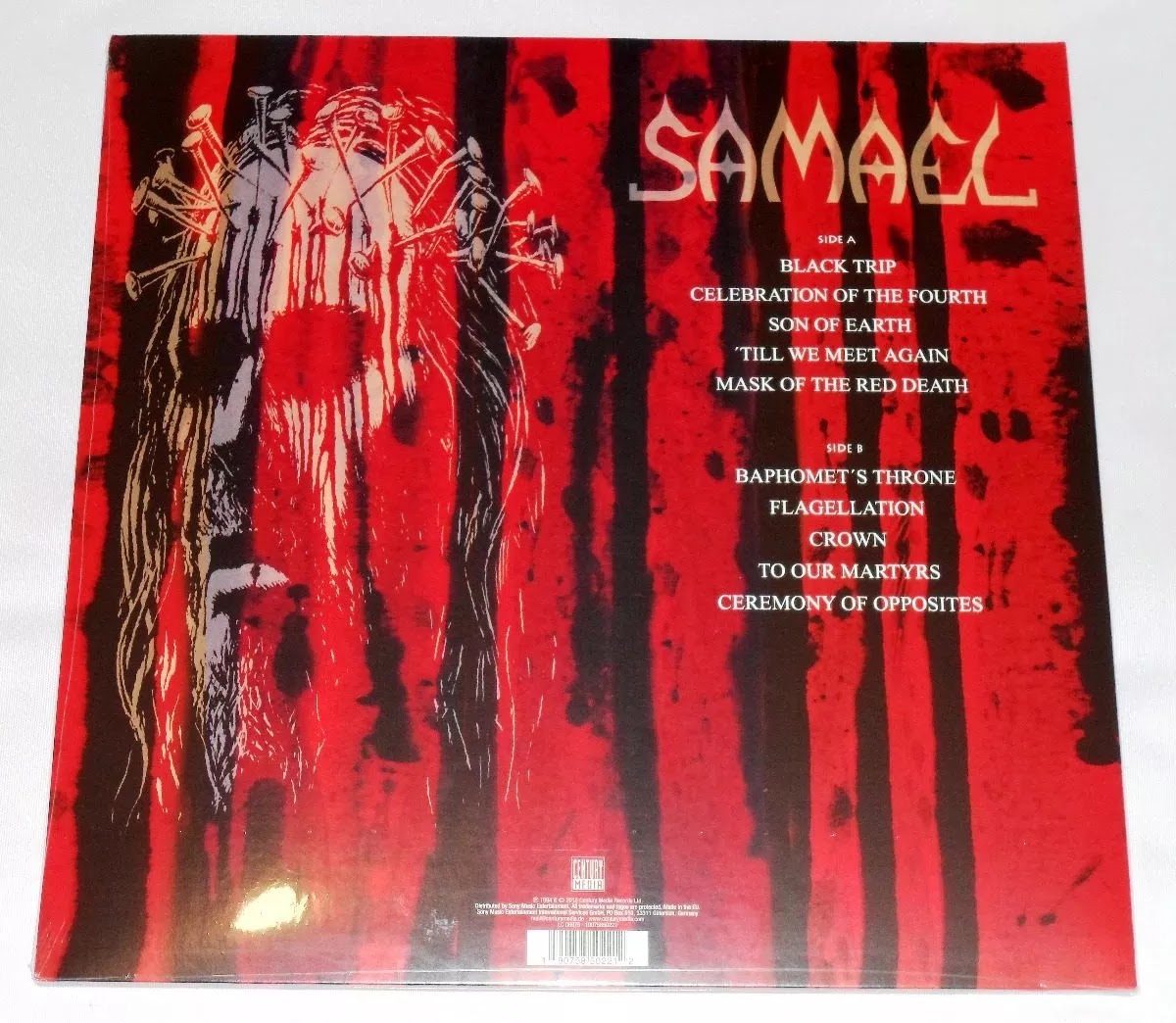
Samael "Ceremony Of Opposites" (Century Media records 1994)


1.     Black Trip 03:19  
2. Celebration of the Fourth 02:53  
3. Son of Earth  03:58   
4. 'Till We Meet Again 04:11
5. Mask of the Red Death  03:04   
6. Baphomet's Throne      03:30  
7. Flagellation 03:41  
8. Crown 04:06  
9. To Our Martyrs 02:37
10. Ceremony of Opposites 04:39


The pernicious trio of Samael enjoyed a great state of form after debuting at the dawn of the 90's with "Worship Him", production where the Swiss already showed clear intentions to take a path musically different from what their contemporaries did in different localities of the European continent. The "Blood Ritual" of 1992 only confirmed the suspicions and exposed the irremediable conatus of Doom Metal that repellessly infected his music. Far from resting on their laurels, the group decided to take a new evolutionary step. A volcanic movement that would take place in 1994, the year in which Samael would become a quartet with the inclusion of Rodolphe H to take possession of the sampler, keyboards, and other electronic gadgets that Samael had to adjust the necessary nuts and tip him, now Yes, a radical and definitive turn to your proposal.


Although the original influence of Black Metal continues to be omnipotent in the singing of Vorphalack, through the cracks of the battleship of this "Ceremony of Opposites" were already allowed to see clear influences of the Industrial and other experimental ínfulas that ultimately would be their decisive bet in future deliveries. This formidable album still protects that mysticism and opacity of its predecessors, and at the same time reveals the courses that the group would take. Here is a fierce disc, discourteous in its walk and harmful bite. Arrogant carrier of an artwork worked, simply wonderful and penetrating to the look.

The band of the brothers Locher is delivered solid as armed concrete for ten songs, just over thirty minutes that are enough to make a massive exercise of impudence and forcefulness. The Helvetica print the album a long procession of ornaments and unmistakable elements of Industrial music that will show their fangs as the minutes descend downhill.


Without further prelude, the colossal "Black Trip" extends the deck of cards on the table. A stark rhythmic base by Xytras establishes the tablecloth on which Vorphalack and Masmiseîm perform a commendable work of instrumentation with fairly classical riffs and structures and correct changes of rhythm to which density and consistency are never lacking.

The group sounds compact and Herculean at all times. The immaculate tracklist has no abrupt cuts between them, and this detail gives us the exquisite illusion of listening to a single theme divided into ten monstrous chapters. Nothing can be objected to deadly monsters such as "Till We Meet Again", "Celebration of the Fourth" or "Flagellation" or the cumbersome manner in which they stab each other. The group was bold and did not fear to integrate other styles, methods and procedures to its jumble, but always trying to guard a straight line with its blasphemous mystic. The peculiar rhythmic sections of his direct and brief ten cuts are dense and impenetrable. To this we add a slight reflux of hypnotic melodies that shudder in an aura of simplicity and good compositional by Vorph.

In the homonymous theme, small sediments of Doom Metal can still be seen scattered throughout the minute, but in both "Baphomet's Throne" and in "Mask of the Red Death" the constant are the persistent electrical developments that interweave an amalgam of twisted successions and extremely thick, where the guttural screams of Vorph stir the cauldron with a devastating and superb mastery. Rodolphe's keyboards can be heard from time to time to accompany the instrumentation, and the thunderous sections starring the sampler give him a kind of important depth to a phenomenal work that gives him very little loopholes to tranquility.


Production, far from being a portent of sound engineering, makes the instruments shine brightly, making them sound and rattle just as the album needs. The constant use of sounds characteristic of the Industrial turns out to be a very profitable element, especially for ornamental purposes. The universal atmosphere of work is based on agonizing resonances that create a funereal and claustrophobic atmosphere that feels great.

Here is a round disc, very prestigious and faultless in the aspects of setting, production and composition. The sum of all the factors that comprise this "Ceremony of Opposites" establish it as an intrepid work, lined with surprises, stupor and a warlike pestilence that catapults him as one of the spearheads in Samael's extensive discography. Opulent material that is embedded directly to the jugular, and very possessed of a perfect hodgepodge of sound ingredients that take a very long and imposing four horns.


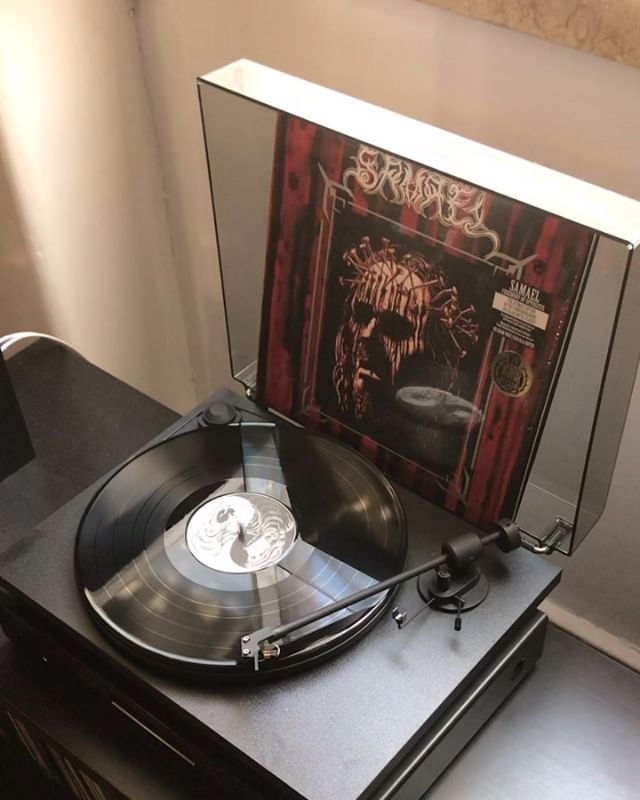
My vinyl 


domingo, 6 de enero de 2019

Samael "Blood Ritual" (Century Media 1992)


Lado A
1. Epilogue 00:39  
2. Beyond the Nothingness 04:31  
3. Poison Infiltration 03:57
4. After the Sepulture 04:35  
5. Macabre Operetta 06:41  
6. Blood Ritual 03:24  
7. Since the Creation... 00:34
8. With the Gleam of the Torches 06:25
9. Total Consecration 02:40  
10. Bestial Devotion 04:49  
11. ...Until the Chaos 03:25

I'm not sure when brutality became synonymous with complexity in metal, but it is a mentality with which I never really agreed. When you say "brutal" people think of technicality, or of speed and precision. People think of Cryptopsy, or Gorguts, or of Cephalotripsy and the slamming ilk. But, I'm not sure I've ever really felt "brutality" from those that sound like that - efficiency, fear, monstrous, awesome, maybe - but not entirely brutality. These bands are like sniper rifles and assault rifles - maintained, cold in their precision, and take time to master and use properly. So, while they may be the deadliest tools, the word brutality doesn't immediately come to mind. When I think of brutality, I think of barbarous tools. Those that are always deceptively effective - simple in presentation and purpose, but efficient for killing: spikes, clubs, axes, saw teeth. Simple shapes meant to be used by anyone who can wield them and with the intent to inflict some damage. This is exactly the type of music Samael made in their early days. 


With few synths, a small intro, and an incredible focus on guitars, it's a straight forward, gloomy, and meandering album. It's filled with "go nowhere" riffs, a shallow, hollow production, and very few tempo changes besides going from slow to slower to slightly less slow. Most of the songs riffs sound eerily similar, with more of a focus on atmosphere than actual song-writing - and the doom elements more or less consist of classic heavy metal riffs and drum fills, with little variation between one song or another. But once you can get past the monotony, the simplistic accents make themselves noticed and add a ton to the album, and actually force the listener to focus less of the parts and more on the whole. 

"With the Gleam of the Torches" is a galloping, almost fun ride through the caverns, with twisting and turning riffs, drums alternating between standard blasts and rocking beats to hi-hat and cymbal accents - the whole thing is reminiscent of being taken away by some ancient crypt-keeper, explaining ancient secrets as his blue flame fills the catacombs with an otherworldy hue. The title track is crushing, starting with a classic guitar rip worthy of early Hellhammer (which, unsurprisingly is obviously the most influential band on Samael at the time) followed by a fury of blasting and power chords and accompanied howls. It moves effortlessly between the two tempos, creating a tense effect of ritual and sacrifice. The most famous after "After the Sepulcture" is brutality incarnate - a crushing, draining riff that moves like some titanic subterranean behemoth - with a serpentine riff and lead guitar that effortlessly shifts from one melody to another, never losing its poisonous effect, before exploding back into the main riff. 


Most of the songs alternate between these formulas, slow and crushing, slight blasting variation and a really deep focus on keeping the listener guessing on what strange twists might be thrown at them later. "Bestial Devotion" has oddly placed major chords among the atonal sounds of the main riff, and a really odd amount of technicality for the album. The closer "...until The Chaos" is a downward spiral of a song with riffs that resemble early Candlemass, but with less melodic leads, and an utterly awesome bass-line that picks up just the right amount of time into the song. If you don't head bang during the last half of the song, you're not listening properly. 


I can definitely see the complaints with this album - it is really slow, a lot of the songs sound almost identical upon first listen, the tone is really kinda of hollow and may be too mono for some and the drums are incredibly active considering how simplistic everything else is. Seriously, Xy has a fill every few seconds on some songs it seems - and this can break up a perfectly good headbanging moment. But, I do think that the rather informal and aggressive drumming makes this album more unique and ritualistic than others playing this style of black metal at the time. The focus on the rhythm and drums definitely makes is feel more sinister somehow, maybe it's the link between primal instinct and drumming, or maybe it's just a predecessor for his leadership later in the group. Either way, Blood Ritual should be a mandatory listen. In all its simple, direct brutality, it never manages to cease being an engrossing and deceptively demanding.


Links for this album. 


miércoles, 30 de noviembre de 2016

Dark Funeral "Where Shadow Forever Reign" Century Media (2016)


Dark Funeral are back after a very short break. It took only seven years. No doubt, Lord Ahriman hates to be passive. However, the band has returned to blue artworks after a red period. The stereotypical yet great painting provides clues about the musical offering. In accordance with the generic cover scenario, the nine compositions show their force without unveiling any kind of experiments. Guess the hiatus of seven years was too short for having a new idea...? Maybe this sounds negative, but this lack of innovations has positive aspects as well. It ensures that Dark Funeral stay away from symphonic bombast, ambient accidents and progressive bulkiness. No doubt, that's a good thing. "Where Shadows Forever Reign" are awesome Black Metal. 

The track list are: 
1.     Unchain My Soul
2. As One We Shall Conquer
3. Beast Above Man
4. As I Ascend
5. Temple of Ahriman
6. The Eternal Eclipse
7. To Carve Another Wound
8. Nail Them to the Cross
9. Where Shadows Forever Reign


The line up are:
Lord Ahriman Guitars, Bass, Lyrics (tracks 4, 5), Songwriting
Chaq Mol Guitars
Dominator Drums, Songwriting (tracks 1, 2, 8)
Heljarmadr Vocals


Anyway, surprisingly calm tones open the album. But rest assured, it does not take long until the combative institution calls for battle. "Unchain My Soul", the initial explosion, is a fine combination of catchy elements and furious leads. The black lava starts to flow and covers all areas. In addition, the subliminal riffing creates an aura of desperation and a short break emphasises the brutality of the fast parts, while the dense and powerful production has a homicidal touch. There can be no question that Dark Funeral wanted to have exactly this sound. By the way, they introduce a new lead vocalist successfully. His contribution is on a par with that of the vigorous instrumental section. He does not revolutionize the overall appearance of the band, but he delivers the appropriate amount of hate, nastiness and violence. Mission fulfilled, I would say.

Dark Funeral still love velocity and tracks like "Beast Above Man" or "As One We Shall Conquer" (fantastic verses!) leave no doubt that the dudes are still able to compose and perform gripping high speed eruptions. Yet the band also likes to take a bath in slowly flowing rivers. The fairly cautious "Temple of Ahriman" (the boss seems to be a little bit vain - why didn't they call it "Temple of Felix 1666"?) is driven by flattening double bass, but its most conspicuous feature is constituted by the extremely mature melody that forms the chorus. Placed on position five, this temple stands in the centre of the album and I do not think that this is a coincidence. A very strong piece - its only blemish is that it has been previously released. The same applies for the solid "Nail Them to the Cross". I hate this kind of recycling, but that's another story.


The shady creatures have penned a compact, more or less monolithic full-length. No inadequate elements disturb the eternal reign of shadows and the only number that cannot keep the quality level (the almost doomy "As I Ascend") does not spoil the joy about the comeback of the legend from Sweden. Too bad that Ahriman is not tortured by the restlessness that haunts Morgan, the mastermind of Marduk. Otherwise, this would probably be the tenth or eleventh blazing full-length of his army. However, the final highlight of "Where Shadows Forever Reign" is marked by the smoothly running "To Carve Another Wound". Its demoniac profoundness lends the mid-paced track an intense aura. Inter alia due to songs of this black grandeur, I am curious to see what Dark Funeral will deliver on their next full-length. I am sure, we will be smarter in seven years.


Recorded at the Dugout Studios in Uppsala, Sweden during February 1st - 26th, 2016.


HAIL DARK FUNERAL!!!!

sábado, 29 de octubre de 2016

Morbid "The Year Of The Goat" (compilation) Century Media (2011)


At the risk of sounding out of my mind or simply uninformed, I must say I enjoy Per Ohlin (a.k.a. Dead) in his Morbid days as opposed to Mayhem. Granted, he only appeared officially with Mayhem on the Live in Leipzig LP and the compiled Projections of a Stained Mind collective, but I much prefer this very typical Swedish death metal sound he achieved with Morbid. Aside from a couple of demos and a few live gigs, Morbid is usually only revered because of Ohlin’s notorious life (and subsequent death), which is sad indeed. While not even close to Entombed, Grave, or even Bathory caliber, Morbid’s December Moon demo ranks as one of the better demos in the late 80s underground in my ever humble opinion. After years of unofficial releases, we finally see a band-sanctioned release of the demo, some cool rehearsal tracks, and some live shows for the insane fan like me that loves this nearly-forgotten band.

Aside from Ohlin, the band at this time consisted of guitarist Uffe Cederlund, John Kennart on additional guitars and vocals, bassist Jens Nasstrom and drummer L-G Petrov. Cederlund, many metal fans know, went onto join Entombed after exiting from Morbid, but the rest of the band has remained pretty silent aside from the occasional foray into another band here and there.


"The Year of the Goat" double CD, triple LP set consists of the complete 'December Moon 'demo from 1987 that caught the ear of the guitarist of Mayhem after Ohlin sent the band the tape, forging an ill-fated partnership that ended in utter disaster. But this article isn’t about that era of Ohlin’s short life or that insipid photograph adorning a million bootlegs and metal sites; it’s a testament to a mediocre band that put out a damn good demo that would have been all but lost to the annals of time if not for Ohlin’s association with the Norwegian black metal underground of the late 80’s and early 90’s. It’s sloppy, under-produced and even rudimentary all over, but it has a delightful (!) charm that just catches your ear if you like the Swedish death sound. Don’t expect Into the Grave or Left Hand Path because, in short, that just ain’t here. What is here is a simple little demo that has four solid tracks that are fun and enjoyable for their primitive worth. “My Dark Subconscious” is Ohlin’s finest moment and what initially turned me on to the band back in ’92 when a copied copy made its way into my hands. It’s a breathy snarl as opposed to the growling yells he employed on the Leipzig album. I much prefer this style of vocal and its sickly feel and malevolent tone that rides waves above embellishment and well under singer supreme. Ohlin was a death metal vocalist, plain and simple, and his legacy is one of legend, though I suspect it has more to do with his death than his accomplishments above ground; again, a sad shame. “Deathexecution” is a fast-paced assault on the ears that, again, is sloppily achieved and caustic in its plasticity, but it is leaps above other lost-to-time demos that simmered in the sweltering scene of this period. These four tracks are fine for what they are, but expecting too much can give you the wrong impression of just how solid a band Morbid could have become with a little more honing. “Disgusting Semla” provides a speedy deathly jaunt through volatility as well, ending with a very humorous, yet dark Ohlin leading a chorus of insane chanting in a childlike voice. It’s eerie, but nothing too serious.


As for the rehearsal and live tracks, they are even more under-produced, but the rehearsals are a nice look at Morbid’s even more ‘unpolished’ design that is still wildly entertaining and overly decent in sound value. I’m not sure even Andy Sneap could have done much with these guys back then, but the intrinsic value is not to be denied. It’s as ugly as a hairless dog caught in a monsoon in Guadalajara, but it does keep your blood going throughout. It’s also very cool to hear rough(er) versions of the December Moon tracks. The live shows, three from various locales in Sweden, are quite the added bonus; they are to be enjoyed more for their existence and testament to the live performer that Ohlin and Morbid was and could have been. You can honestly get the feel of being at one of these assumedly small gigs and just enjoying the hell out of this band just going for it on all cylinders without mind for production or perfection. They were, by all accounts, death metal at its most bare and simplistic. The Ultrahuset, November of ’87 show was just a violent barrage caught on tape. The music is really out of control that night, and the crowd seemed to really be into the band from beginning to end. These little shows are more for those that wish to have complete audio records of certain bands, but hell, the entire Morbid catalog is for the ardent fan that has to have all things Swedish death. Sure, the occasional Mayhem fan seeps into the fray because they want to examine Ohlin’s output pre-Mayhem, but they are almost always unsatisfied because it doesn’t compare, in their view, to Leipzig or the two studio tracks of “Carnage” and “Freezing Moon” on Projections of a Stained Mind back in ‘91. I personally find it surpassing, but each his own opine. This is a nice set for the true fan of underground death metal that doesn’t expect anything even close to perfection in either style or sound. 


The packaging is very nice. We’re treated to a ton of photos and liner notes about the band, including musings from band members and drawings of Ohlin’s that were supposed to be album covers but, sadly, never saw fruition. The CD version comes in a sweet digibook design that is a bit oversized, but very attractive and sturdy. It also comes in a triple fold-out vinyl that is done quite nicely. There are limited pressings of varying colors for the fan that has deep pockets, but the real winner is the music. I, however, did not stall in ordering my purple vinyl set in a limited edition of 200 because, well, I was up late one night and saw the preorder. And I like purple. I also ordered the CD…as you should as well. 

To close void of bravado or superfluous anecdotal referencing, allow me to sum up Morbid’s essence in a few words: Morbid was four Swedish fellows who loved metal music. They occasionally played to small crowds of drunken Swedish metalheads and had a damn good time doing so in many low-fi particulars. They were nothing fancy or even memorable, but they deserved to be known as more than the first band of ‘Dead’ from Mayhem.


All tracks re-mastered by Ulf Horbelt at DMS, Marl, Germany.

Vinyl 1:
Tracks 1 to 4 taken from the "December Moon" demo (1986).
Tracks 5 to 11 are rehearsal tracks.

Vinyl 2:
Tracks 1 to 9 recorded Live 23.10.1987 at Birkagården in Stockholm, Sweden

Vinyl 3
Tracks 10 to 13 recorded Live 26.04.1987 at Ultrahuset in Stockholm Sweden
Tracks 14 to 17 recorded Live 23.11.1987 at Ultrahuset in Stockholm Sweden


Classic song and hymn for swedish band Morbid. 


Full demo from 1987 


Compilation 

lunes, 20 de octubre de 2014

Morgoth "Cursed" (1991)


Publicado el 24 de abril del año 1991 supuso la entrada para las bandas alemanas en el mundo del Death Metal underground que para esas fechas aún estaba dominado por el estilo americano, ingles y sueco. Todos y cada uno con su particular estilo, en países del resto de Europa también se gestaban bandas con calidad y en Holanda así como Alemania la infección de Death Metal se estaba haciendo presente, la banda MORGOTH luego de publicar dos Ep en 1989 "Ressurection Absurd" y en 1990 con "The Eternal Fall" dieron el gran salto a la publicación de su primer full-lenght llamado "Cursed" una devastadora joya del Old School Death Metal.

La label que se hizo cargo de la publicación de este grandioso trabajo fue la Century Media Records con sede en Alemania precisamente y que en sus inicios fichó importantes bandas que hoy en día son consideradas verdaderas referentes del género. Así con el apoyo de la disquera que empezaba a surgir como una fuente de talentos de Europa. Se publicó en el año 1991 este debut que es considerado uno de los mejores de la historia. Fue editado en formato CD, cassette y vinilo por esa label. Fue grabado en los Woodhouse Studios Dortmund de Alemania y mezclado en Music Grinder, L.A. Fue mezclado y producido por el gran Scott Burns

La alineación que grabó este trabajo fueron Marc Grewe en las poderosas vocales un verdadera bestia con las guturales, Rüdiger Hennecke en la batería, Sebastian Swart en el bajo, Carsten Otterbach y
Harald Busse en las guitarras. Tremendo estilo con mucho cambios de ritmo en medio de esos rifs y arpeguios densos y pesados. La batería demoledora al mejor estilo de las bandas suecas e inglesas, muy fuertes los golpes y en ocasiones rapidísimos que van en coordinación con las veloces guitarras. Morgoth ya había demostrado que venía por todo en el underground del subgénero de metal extremo.


La pieza con la que abre el disco es un clásico dentro del subgénero, lleva por nombre "Isolated" y como su nombre lo dice queda uno desolado ante la brutalidad del intro de las guitarras con todo lo que el viejo estilo llevaba. Aquí se respira el Old School Death Metal en toda su potencia. Se creo un vídeo para dar a conocer a la banda alemana que pasó algunas vez en la MTV pero de Europa, aquí Scott Burns se encargó de realizar un verdadero "mazo de Thor" aprisionando tus sienes con cada nota de los instrumentos de la banda.


Videoclip official de Morgoth "Cursed"

Otra pieza que sirvió para promocionarse ante Europa y el resto del mundo fue "Sold Baptism" ya que de igual manera se produjo y grabó un vídeo que igual demostraba a la banda como una auténtica pieza demoledora y de destrucción auditiva ante las audiencias. Alemania tenía un representante del Death Metal muy respetable para el resto de las bandas del subgénero así como para la prensa especializada y los fanáticos que habían conseguido para esas fechas los cuales ya se contaban por miles en todo el mundo.


Videoclip official de Morgoth "Sold Baptism"

La banda logró dar un salto gigantesco con la publicación de su primer material, años más tarde se reeditó esta grabación pero remasterizada por la Century Media Records en 2006 para el formato CD, mientras que para el vinilo fue reeditado en el 2011 por la label Kreation Records. Así que hay material para conseguir y aprovechar de esta banda alemana. Este trabajo los elevó a categoría de leyendas en el subgénero y es considerado material de culto por los fanáticos de aquellos años y de las nuevas generaciones. Espero que puedas conseguir este material en cualquiera de sus ediciones publicadas. Hasta la próxima reseña amigas y amigos.  


ANTON

miércoles, 1 de octubre de 2014

Unleashed "Across The Open Sea" (1993)


Era el año de 1993 un día 01 de octubre cuando salió a la venta el tercer disco de los emblemáticos suecos UNLEASHED, editado por la emblemática label alemana Century Media, quienes se encargaron de que este trabajo fuera uno de los álbumes cumbres no sólo del Death Metal sueco sino de Death Metal en general. Este trabajo permitió a la banda sueca estar entre las grandes agrupaciones que aportarían una obra maestra para la discografía underground de ese época y que en nuestros días sigue siendo alabada como una de las mejores y de las que no deben faltar en la colección de todo buen metalhead fanático o no del Old School Death Metal.

La banda ya había recibido elogios con sus dos trabajos en años anteriores titulados "Where No Life Dwells"(1991) y "Shadows In The Deep"(1992); piezas que también forman parte esencial de la discografía de la escena Death Metal en aquel primer lustro de los años 90´s. La banda se encargó personalmente de producir por cuenta propia las mezclas y ecualización de este trabajo, esto resultó un gran acierto para ellos. Fue grabado en los EMI Studios de Estocolmo y las remasterizaciones fue realizada en los Cutting Room del mismo lugar. Así gracias a la gran disposición para realizar bien las cosas en materia de producción es que se realizó este material con muchos puntos a favor de la banda y del álbum que marcó pauta entre sus contemporáneos.


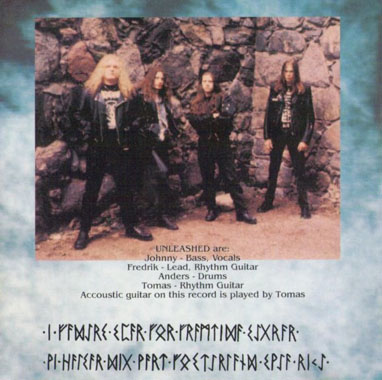
La banda tuvo la siguiente alineación para este álbum; Johnny Hedlund en las vocales y en el bajo, notablemente excepcional el timbre y el tono de guturales de este integrante de la banda y parte esencial en la identificación del sonido de Unleashed sin lugar a dudas; en las guitarras estuvieron los habilidosos Fredrik Lindgren y Tomas Olsson, creadores de líneas de guitarras estructuradas de tal manera que te hacen una adicción a escucharlos una y otra vez, cabe mencionar que gracias a los conocimientos adquiridos en las dos producciones antes mencionadas que precedieron a éste álbum, la tonalidad "grave" y crujiente de este álbum fue muy bien recibida por la crítica especializada en ese tiempo y hasta la fecha sigue recibiendo elogios; finalmente en la batería estuvo Anders Schultz con un trabajo decente pero sobresaliente al apoyar a los rifs de guitarras con los poderosos compases de su batería a lo largo de las piezas.

El álbum tiene 11 canciones de muy buena manofactura del llamado Death Metal Sueco de aquellos años, una de las piezas más sobresalientes es la feroz pieza abridora del disco titulada "To Aasgard We Fly" con ese excelente manejo de las guitarras comandando el feeling de una pieza de Death Metal muy bien estructurada en todos sentidos, la voz de Johnny suena perfectamente brutal cada vez que escuchas el coro de la composición. Ni que decir que la batería suena a toda potencia con cada rasgueo de las guitarras y el poderoso bajo ecualizados en sonido graves. En fin que es para disfrutarse ésta canción de principio a fin.


El track list es el siguiente:

1. To Asgaard We Fly 03:54  
2. Open Wide 03:12  
3. I Am God 04:33  
4. The One Insane 03:03  
5. Across the Open Sea 02:45   instrumental
6. In the Northern Lands 03:53
7. Forever Goodbye (2045) 02:27
8. Execute Them All 03:20  
9. Captured 03:47  
10. Breaking the Law (Judas Priest cover) 02:13  
11. The General 04:22


Unleashed "To Aasgard We Fy"

La siguiente pieza esencial de este disco es la titulada "The One Insane" con sus rifs de guitarras muy bien estructurados, es de las piezas con más sonido adictivo que haya compuesto una banda de Death Metal en general. Por lo que se llevan las palmas en esta gran composición y por supuesto no demerita en nada los sonidos del bajo y de la batería a lo largo de la pieza. Muy buen coro en las letras de la canción que es otro punto a su favor para que te hagas adictivo a este disco; los poco más de 3 minutos de duración que tiene esta pieza son insuficientes para tí ante el brutal "feeling" que desprende la composición.


Unleashed "The One Insane"

La última pieza a destacar de éste gran disco es el homenaje a la gran banda de Heavy Metal de UK Judas Priest, a través de la pieza clásica "Breaking The Law" la cual fue trabajada con el estilo de la banda, es decir en plan Death Metal toda la estructura de esta himno, una buena idea pensada por los integrantes de la banda para incorporar en este álbum el cual forma parte de una pieza más de su estupendo estilo. De este cover se desprenden las opiniones de que es uno de los mejores de una pieza clásica en el estilo de metal extremo, por otra resultó un gran acierto para este trabajo ya que es inevitable comentar este inclusión en el álbum a la hora de las reseñas.


Unleashed "Breaking The Law"

Este tercer álbum de la banda fue editado en 3 formatos, ya comentamos el CD publicado en ese año. También salió en cassette y en vinilo de color negro en ese mismo año. Las ventas fueron sorprendentes por lo que se puede decir que comercialmente no les fue mal en ello. En 1994 la label polaca Loud Out Records la reeditó en cassette y la última reedición corrió a cargo de la misma Century Media con una versión remasterizada en el 2001 en formato CD junto con el álbum "Shadows In The Deep" trabajo de 1992 como ya se ha mencionado. Este disco es de los infaltables en la colección de los melómanos de verdad en cualquier formato por su gran calidad compositiva. Se le atribuyó en un principio el término "Viking Death Metal" en referencia a las letras que responden a un homenaje a la mitología escandinava, pero finalmente quedó como una "masterpiece" del Death Metal sueco.


Arriba la edición en vinilo de la Century Media del álbum "Across The Open Sea" en 1993, debajo la edición en cassette del mismo trabajo en ese año.


Espero que esta reseña te haga adquirir esta pieza esencial de todo el Death Metal no sueco sino de la historia del underground en general que no te arrepentirás en ningún momento de haberlo adquirido.

Hasta la próxima amigos y amigas.

ANTON